
We’ll get there if we just keep putting one foot in front of the other. Running can be so simple. Until it’s not. Especially when it comes to training. So many ways of going about it. So many terms thrown around, sometimes even describing the same thing. It all can sound incredibly complicated.
….Ventilatory Threshold, VO2max, Heart Rate Reserve, Block Training, HIIT, Critical Velocity, Periodization, Maffetone…..
Begs the question: is there a “right” way to train? The answer to that is: it depends. Most certainly there are different routes that can lead to success. Therefore, when asking this question, be assured there will be as many answers as there are ways to become a better runner – assuming this is the ultimate goal of training.
What’s clear, however: there isn’t one “best” or “right” way to train. And that’s for a variety of reasons:
- Nobody has it all figured out:
Science changes over time and makes new findings all the time. While some fundamental pillars stand the test of time, many parameters evolve over time. - Humans are complex:
One person is never the same as the one next to him or her. Different athletes react differently to the same training stimulus: what works for one may not work for someone else. - Psychology changes the equation:
Human physiology is pretty well understood, particularly in the context of training. Much less so is the psychological aspect. Running is, first and foremost, an act of moving the body forward. That requires energy, hence it’s physiological. Yet, the mental side plays a vital role in motivation, discipline, perceived exertion, the conscious response to fatigue or pressure in race situations.
It’s complicated, right? It doesn’t have to be, though. Because if we get the fundamentals wrong, then all nuances and tiny details become rather meaningless. This is true for most things in life, but especially true for training.
Train with Purpose
Before focusing on individual workouts, interval paces or rest periods, we need to start from the very top. We need to figure out the purpose of our training.
With purpose I mean: what am I training for? Perhaps a specific race, or an individual skill, strengths or weakness I want to address. Put simply: a goal. Knowing what I want to achieve with my training over the next weeks, months or even years – even on a high level – is key to work with purpose towards this goal.
In the next step we can break it down further and start thinking in greater detail about: what’s the purpose of my next run and how does it serve my goal?
Usually this is the moment when things can become messy. Because there are so many different ways to train and many more ways to describe it (think about the rich training literature, running related channels on Youtube, athlete blogs… so much is out there to consume, take in and digest). Don’t listen to all the noise. Instead have a clear focus on the fundamental purpose of any given run.
In my view there are three distinctly unique purposes for a run:
- Recovery
- Maintenance
- Stress
This is to answer the why am I doing this run. Without a clear purpose – the why – there isn’t a what and certainly not a how. Of course, this happens on a high level and the more granular details have to be applied afterwards when the exact context of the environment has to be taken into account as well.
Improve with Purpose
We train to improve performance. But how does the body improve? Through a process called Supercompensation:
When we stress (training) the body with a new (and appropriate) training load and give the body time for appropriate recovery, then the body will not only return to the previous baseline, but supercompensates in order to be prepared for a greater future training load.
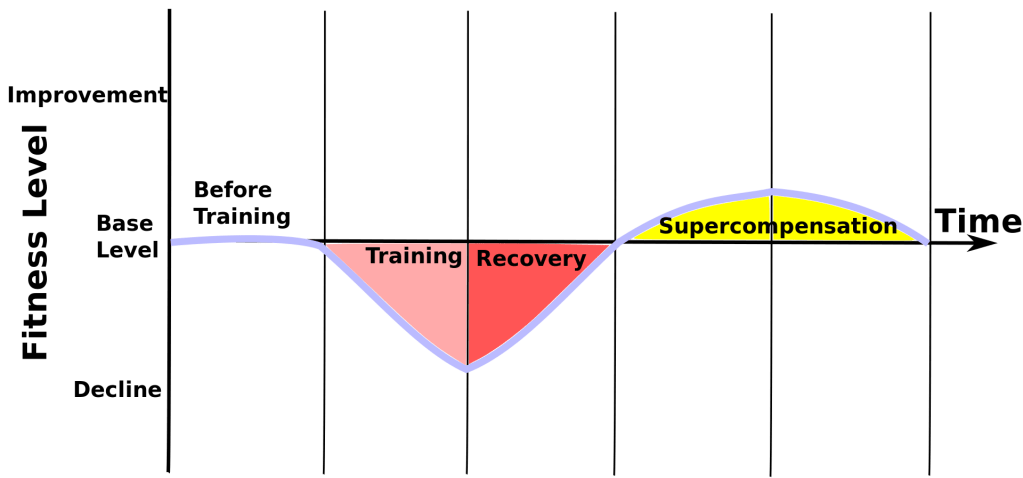
Therefore, if we want to improve performance we need to train (stress) the body in order to elicit adaptations to the (new) stress. But it’s not only the actual training that improves performance. The adaptions, and with that the improvements, will occur during the recovery period, when the body readies itself (adapts or supercompensates) for the new (future) stress.
This shows the importance of adequate recovery. Because we want to give the body time to be prepared for the next “stressful” workout. Of course that’s not always a linear process. Some adaptations take longer to materialize and require a longer recovery period.
With that in mind we can think of training as a constant cycle of stress, recovery and maintenance with all three of these pillars being interdependent:

“Stress” is training with the purpose of eliciting a response from the body, i.e. adaptation. Think tempo run, VO2max intervals, hill reps, long runs.
We need to clarify “stress”. To some extend it does depend on the level of the athlete. For a beginner on a Couch to 5k plan the simple act of getting out for a run is “stress”. For a well-trained runner this very same run won’t be perceived as sufficient stress.
In general, though: stress usually refers to a “workout”. This means ‘quality work’, high intensity- or race specific training. It’s your tempo run, threshold session, VO2 max intervals, hill repeats or long marathon specific runs – usually the stuff that is hard/long/intense enough to create a desired response (adaption) from the body, i.e. improvement.
But we can’t always stress the body. And we don’t want to. Because the magic happens during the recovery phase. If we always stress the body without sufficient time for recovery all we achieve is to break the body down and our performance will suffer eventually. The body won’t be able to restore the energy required for the next intense workout, or perhaps even race. Yet without adequate recovery there is no time for the body to absorb the training load and adapt to the stress, i.e. no improvement. Instead the danger of overtraining increases significantly.
Recovery can be passive (complete rest), although, if possible, active recovery is preferred. The topic of the recovery run remains hotly debated. Personally, I have come around to valuing its benefits. Active recovery doesn’t need to be running, though. It can be cross-training like swimming, cycling or hiking. Anything that keeps the body active without putting any significant stress on the system.
Different workouts (stress) require different recovery times. In fact, some parts of the body recover faster, others slower. And therefore adaptations to training can differ widely as well. Hard anaerobic workouts require an extended recovery period and have a longer time to realise adaptations from as opposed to purely aerobic work:
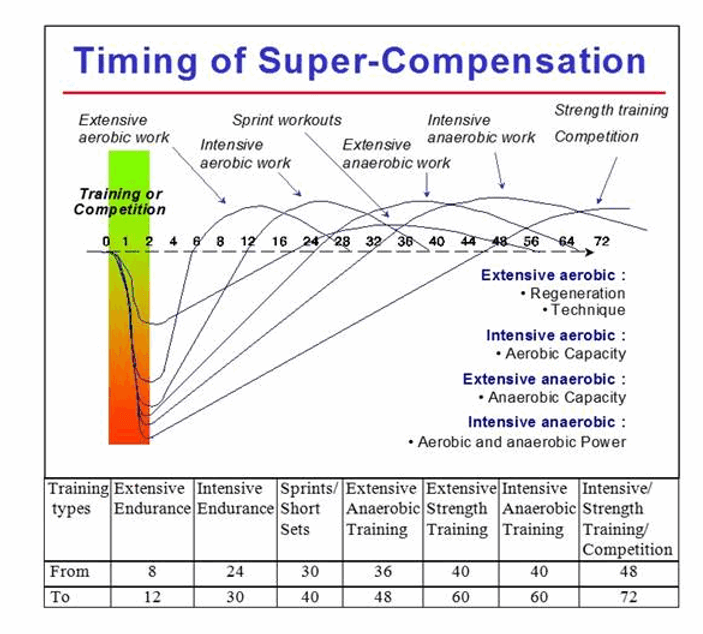
super-compensation
Use It – Don’t Lose It
After a hard workout, say 5x 1k reps at Critical Velocity pace, the body needs time to recover before it can perform to the same high standard again. The solution isn’t to do nothing for a few days, though. While we need time to recover from a ‘stressful’ workout, we also need to maintain what had been gained in the past.
That’s why maintenance is a critical part of any training plan and is distinctly different from pure (active) recovery. Maintenance work usually slots in when the initial acute recovery period is over, but we are not yet ready for the next stressful workout. In other words: keep the body ticking over. These type of “bread and butter” sessions prevent the loss of fitness, speed or strengths, and prepare us to get ready for the next high-quality workout.
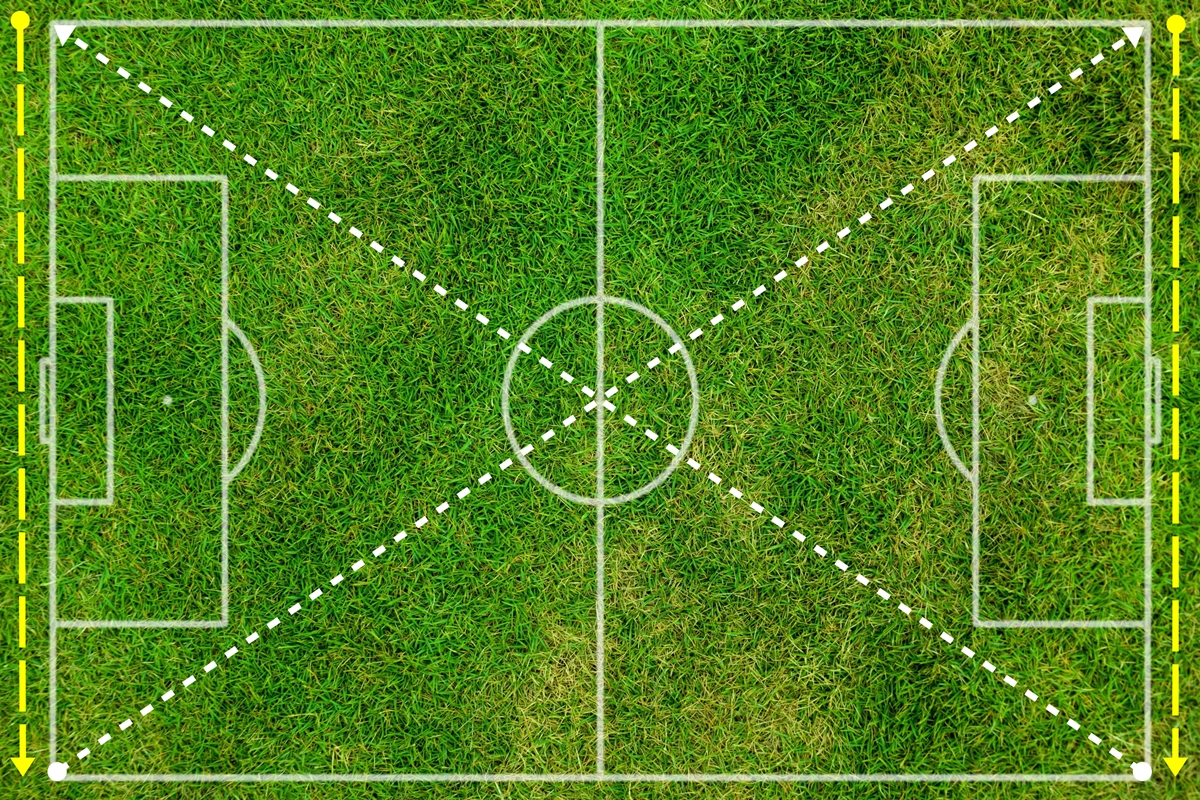
A good example of maintenance work could be a relaxed 45min endurance run with a few strides tagged on at the end, or Diagonals on the grass – something the Kenyans enjoy doing.
Maintenance is also critical for speed. Particularly when training for a marathon or long mountain race, speed- and anaerobic work plays little to no role in the daily training schedule of many runners and may end up being neglected. But: don’t use it and lose it. Therefore adding some faster stuff once in a while, even if this isn’t race specific at first glance, is still important. It’s always easier to maintain what has been acquired, at least to the most part, compared to gaining it again.
Keep it Simple: Train with Purpose
The constant cycle of stress, recovery and maintenance is what training should be build around. This is a simple enough concept. When we go out for a run we need to be clear about the purpose of the run.
What am I doing and why am I doing it: recovery run? A workout to maintain what I have gained in the past? New stress? The overall training history will provide the necessary context.
In keeping with this concept, we’ are’re offered flexibility at the same time. Because even if my training plan would call for a specific workout today, I can still adjust depending on how my body feels. If I don’t feel fully recovered and ready for the next intense workout yet, I can change its purpose accordingly.
Therefore the run can still have a clear purpose and isn’t wasted on a workout that couldn’t be executed properly.
I feel we runners often tend to get lost in the nitty and gritty of workout details: the exact interval time, rest periods, lengths of the reps or specific heart-rate zones. All has its place, for sure. Nonetheless, a lot of it can confuse more than it helps to get runners focus on what is really important: the fundamentals.
Doing the fancy new pyramid interval workout from the latest Runner’s World magazine may seem fun. But if I don’t put it in the context of my training and understand its purpose then it may do nothing for improving me as a runner.
So: keep it simple. Stress the body sufficiently and regularly but give it ample time to recover while maintain what has already been gained.
I am fully aware that some of the explanations and concepts outlined here are an oversimplification of human physiology and training science. This is deliberate. There are way smarter people out there, who go deep into every little- and important detail. What I maintain, though, is that those details matter little if the fundamental parts of training are not understood nor put into practice.
———–
Photo Credit:
Supercompensation Graphic: By Haus – Own work, CC BY-SA 3.0